


Comic Art Fans may be compensated if you make a
purchase after clicking any of the links shown.

PARADISE ALLEY (1978), original movie poster art by Richard Amsel
Owner: Jimmy Willis
Artist:
Richard Amsel (All)

Click Image to View Full Size
Artwork Details
|
DescriptionIn the early 1970s, when Sylvester Stallone was barely an unknown actor scraping by on supporting roles, he conceived a script titled PARADISE ALLEY. Set in the New York neighborhood of Hell's Kitchen in the 1940s, the story centered on three Italian-American brothers who, trapped by poverty, sought a chance for upward mobility through wrestling. Beyond its plot, the script is an allegory about the dignity of the defeated, brotherhood as a refuge, and the body as a place of redemption. It was a deeply autobiographical and symbolic work in which Stallone poured his own experience of marginalization and his vision of life as a constant struggle.However, the project failed to find acceptance in Hollywood. Time and again, studios rejected the script, citing its dark tone and apparent lack of commercial appeal. Stallone even received offers to sell the story on the condition that another actor play the lead, but he firmly refused. It was then that, inspired by a fight between Muhammad Ali and Chuck Wepner, Stallone wrote Rocky in 1975. The script took up many of the themes present in PARADISE ALLEY: social marginalization, struggle as a metaphor for survival, and intimate triumph in the midst of defeat. Once again, Stallone refused to give up the lead role, and although the situation seemed to be repeating itself, this time he found the complicity of producers Irwin Winkler and Robert Chartoff, who accepted the risk. The result was historic: Rocky, released in 1976, not only won over audiences and critics, but also won three Oscars, including the statuette for Best Picture, turning its author and performer into a global figure. With this recognition, Stallone was finally able to revive his old project. In 1978, he directed, wrote, and starred in PARADISE ALLEY, marking his directorial debut. Its reception, however, fell far short of replicating the Rocky phenomenon: critics considered it contrived, and its box office run was modest. Over time, however, the film acquired a certain cult status and, above all, a revealing document of Sylvester Stallone's creative universe. Stallone was enjoying the success of Rocky and now had some creative power to decide the promotional approach for his next movie. He wanted Richard Amsel to create the official movie poster, as he was already renowned for his pictorial style, featuring expressive portraits and nostalgic compositions, which fit perfectly with the film's 1940s setting. Amsel not only accepted the commission but transformed it into a true Art Nouveau-inspired masterpiece. He did so by deploying his most characteristic style: a synthesis of classical painting and modernist techniques, enriched with ornamentation, integrated typography, and arabesques with a refined cadence. This mark distinguished him from colleagues such as Bob Peak, whose energy was more explosive and kinetic; or Drew Struzan, who perfected a refined photorealism with the use of airbrushing. Amsel, on the other hand, emerged here as the master of decorative elegance and poetic atmosphere. The original artwork for PARADISE ALLEY is presented as a narrative collage, a mosaic of scenes and characters that surround and frame the central protagonist. Although it includes a dozen secondary figures, the composition is undisturbed: Amsel achieves an astonishing aesthetic unity, as if it were a self-contained mural, where the titles appear magnificently lettered and integrated into the whole, elevating the poster to the status of a masterful composition in its own right. The color palette is built around warm and vibrant contrasts, dominated by a wide range of browns—sepia, mahogany, suede, fallow, and chocolate—that intertwine with the green and gold accents of the framing, as well as the flashes of lemon yellow and soft turquoise blue of the labels. The background portraits, designed to highlight the protagonists, give the whole thing a theatrical, almost stage-like feel, which would have stood out notably both in movie theater lobbies and in the illustrated pages of magazines of the time. However, incredible as it may seem, the final poster imposed by Universal Pictures to promote the film was not this one, but a bland and inconsequential photographic composition. One wonders what would have happened if Richard Amsel's masterpiece had been the one used to advertise PARADISE ALLEY worldwide. Would it have been a box office hit? Sadly, that's something we'll never know. Social/Sharing |
About the Owner
|
 |
Contact the OwnerUse can use a contact form to send an email to this gallery owner,
|


Latest Updates
All |
|
 |
|
 |
|
 |
|
 |
|
 |
|


 |
|
 |
 |
 |

Auctions ADVERTISEMENT
Auctions
| Christopher Cook and Mike DeCarlo The Powerpuff Gi |
Auctions
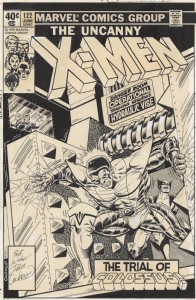 |
DAVE COCKRUM AND TERRY AUSTIN X-MEN #122 COVER (SOLD FOR $250K) |
Auctions
 |
Carl Barks - Sheriff Donald at Gory Gap Oil Painting - Four Color #199 “The Sheriff of Bullet Valley” |
Hakes Auctions
 |
HAWKMAN VOL. 3 #27 COMIC BOOK COVER ORIGINAL ART BY RON LIM. |


Subscribe to the YouTube Channel.. FREE!
Featured Art Rep
 Splash Page Comic Art
85 Repped Artists
17 Accepting Commissions
17 Accepting Commissions
Coleby
Pleece
Dagnino
Evans
Raimondi
Breccia
Commission an Artist


For Sale Updates
Classified Updates |
|
Robert Hughes1/23/2026 7:28:00 PM |
|
Monty B1/23/2026 5:37:00 PM |
|
Mugen R.1/23/2026 4:52:00 PM |
|
ComicLINK.Com Auctions1/23/2026 4:47:00 PM |
|
NELSON H1/23/2026 3:11:00 PM |
|
ENRIQUE ALONSO1/23/2026 2:36:00 PM |
|
Dealer Updates |
|
RomitaMan Original Art1/24/2026 2:43:00 AM |
|
Coollines Artwork1/23/2026 9:53:00 PM |
|
Koch Comic Art1/23/2026 7:20:00 PM |
|
Anthony's Comicbook Art1/23/2026 4:51:00 PM |
|
ComiConArt1/23/2026 3:57:00 PM |
|
Catskill Comics1/23/2026 2:15:00 PM |
|
|

Become a Premium CAF Gallery Owner & you'll be supporting CAF and also gain access to many services and features not available to standard members.
|
Comic Art Fans may be compensated if you make a
purchase after clicking any of the links shown.